ON THE LABEL
Chocolate means 35%
Plain chocolate must hold at least 35% dry cocoa solids; milk chocolate at least 25%.
Compare the types
 doodlechocolate
FROM POD TO BAR
35% the legal floor
What the label promises, and what the white dust means.
In the UK, "chocolate", "milk chocolate" and "white chocolate" are legal names with minimum recipes. Here is what each one has to contain, why a bar can turn pale, and how the cacao tree makes it all possible.
Plain English, with the sources linked.
Updated
Check a labelTHE SHORT ANSWER
UK law sets minimum cocoa, milk and fat
for every type of chocolate.
ON THE LABEL
Plain chocolate must hold at least 35% dry cocoa solids; milk chocolate at least 25%.
Compare the typesON THE SURFACE
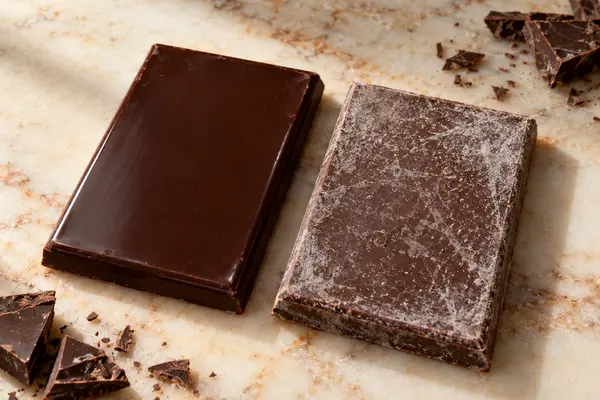
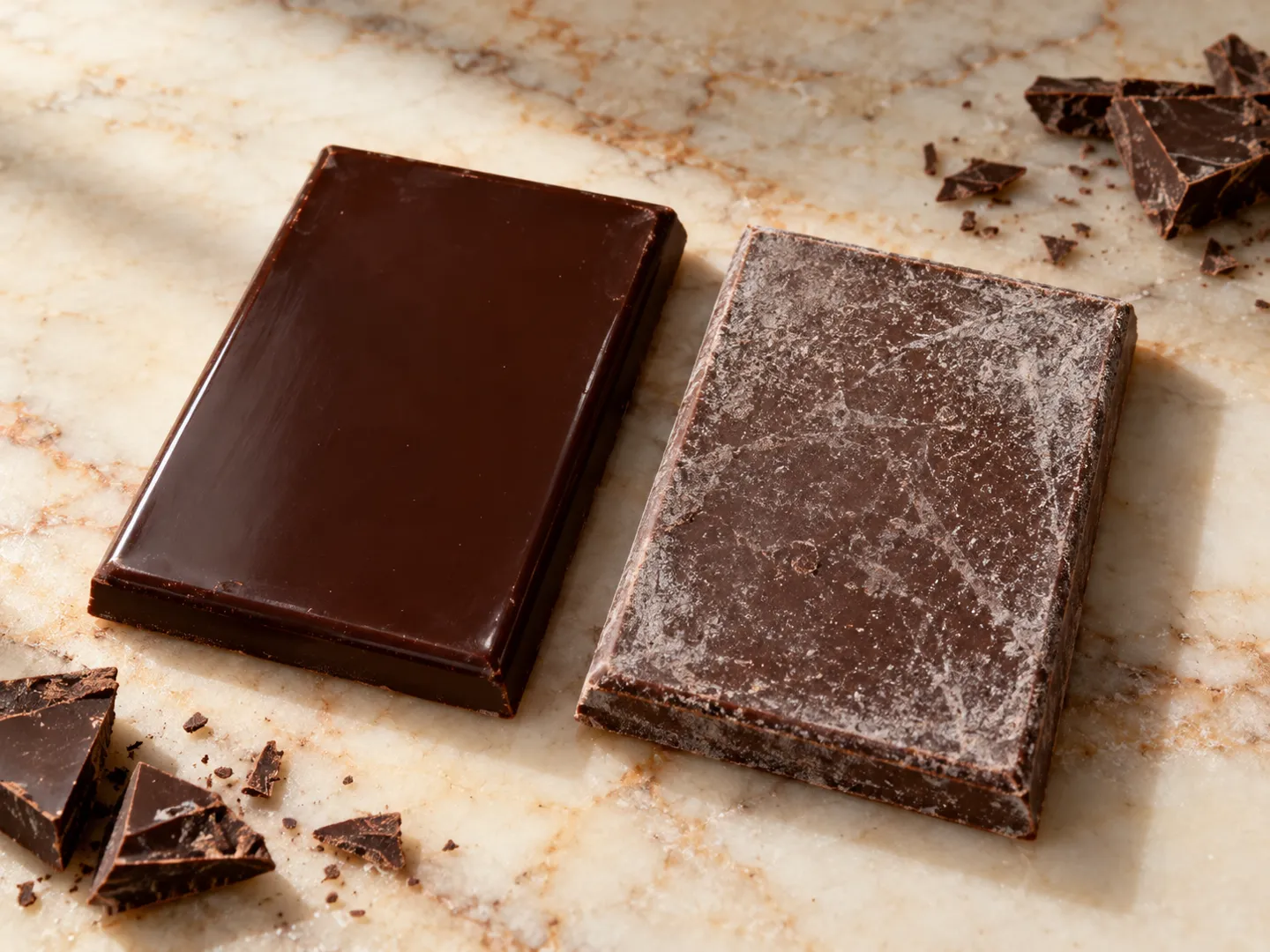
A white, dusty film is usually fat or sugar bloom. It changes texture, not safety.
Two kinds of bloomON THE TREE
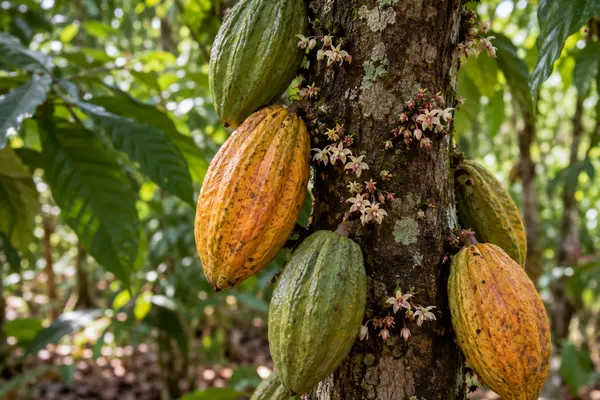
Cacao flowers and fruits straight from the trunk and branches, each pod holding 30 to 40 seeds.
Cacao factsA QUICK LABEL CHECK
Pick the name on the wrapper. The minimums come from Schedule 1 of the UK Cocoa and Chocolate Products Regulations 2003.
These are legal floors, not quality scores. Many bars contain far more cocoa than the minimum for their name.
WHY CHOCOLATE TURNS WHITE
Same pale look, different causes.
Both are harmless.
Greasy sheen
Cocoa butter on the move
Cocoa butter melts at about human body temperature. Heat, light or rough handling can push it to the surface, where it sets as a white sheen or blotchy spots.
FAT BLOOM · WARMTH
Dry, gritty dust
Sugar drawn out by moisture
Moist storage pulls sugar to the surface, leaving a rough, grainy film. Taking cold chocolate out into moist air can trigger it.
SUGAR BLOOM · DAMP
Bloomed chocolate has lost its neat crystal structure, which is why it can taste chalky. Melting and re-tempering it realigns the crystals and brings the shine back.
KEEP IT AT ITS BEST
"Chocolate", "milk chocolate" and "white chocolate" each promise a legal minimum. Check which one the wrapper actually uses.
Warmth and light drive cocoa butter to the surface as fat bloom. A cool, dark cupboard beats a sunny worktop.
Damp storage causes sugar bloom. If chocolate has been in the fridge, leave it wrapped while it warms up so moist air does not settle on it.
The PDSA advises keeping chocolate safely out of paws' reach. Dark chocolate carries the most theobromine.
CACAO FACTS
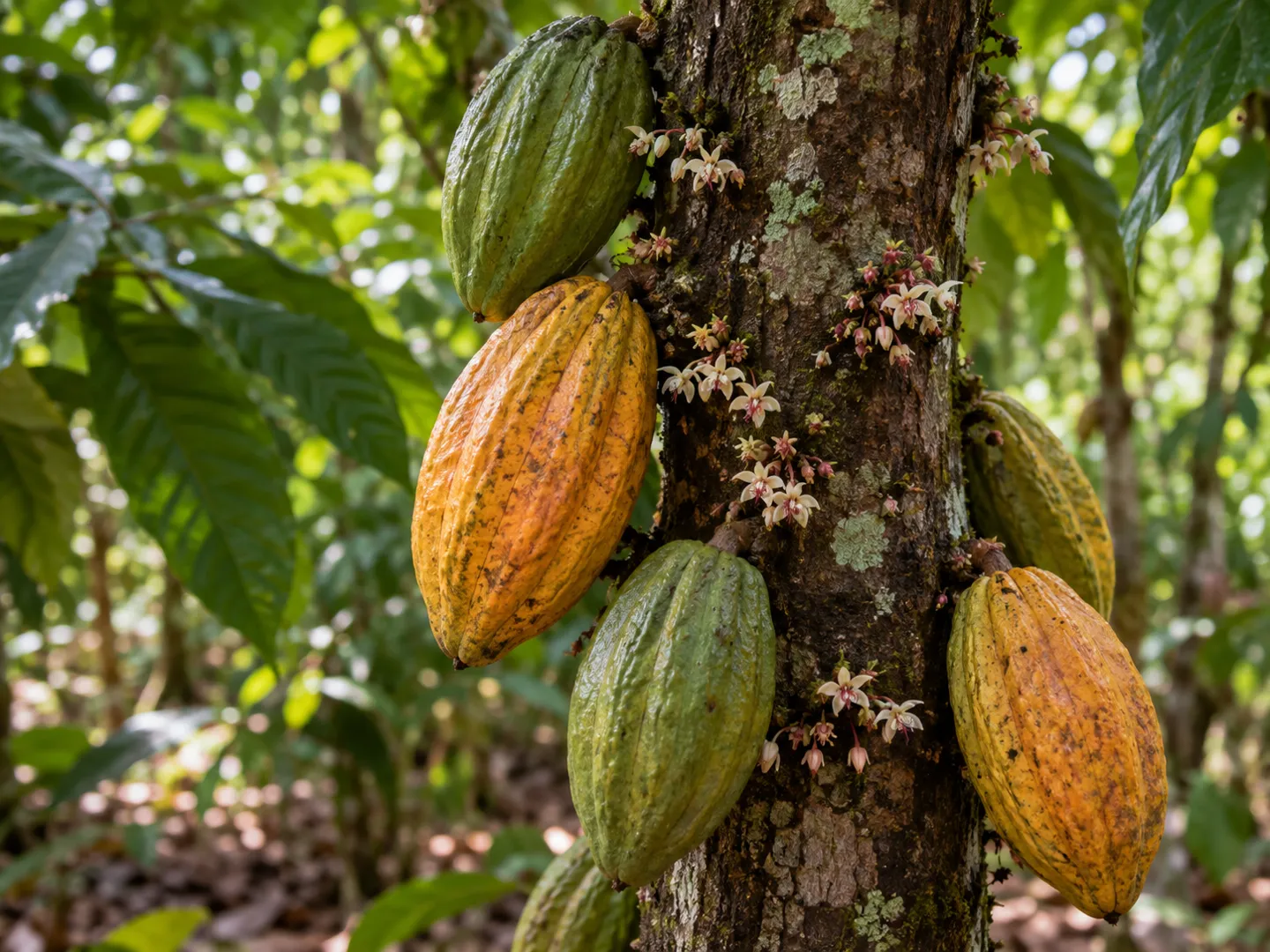
The Latin name Theobroma means "food of the gods". The Olmecs were growing the cacao tree as long ago as 400 BCE.
Cacao flowers grow directly on the trunk and branches rather than on new shoots. In the wild, tiny midges pollinate them.
Each ribbed fruit holds 30 to 40 seeds, the cocoa beans, and an individual flower opens for a single day.
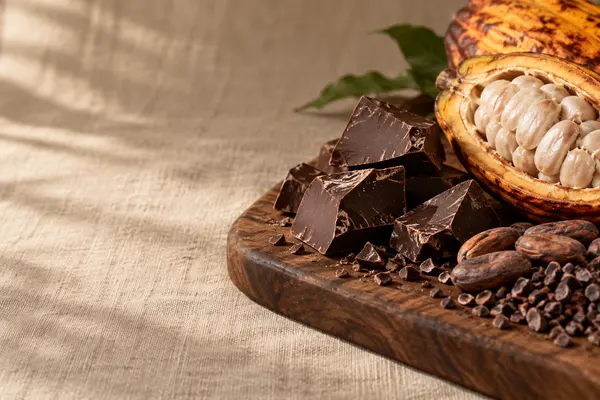
To make chocolate, the beans are fermented, dried, roasted, husked and then ground into chocolate liquor.
Côte d'Ivoire and Ghana grow about two thirds of the world's cocoa, and roughly 95% of cocoa comes from small farms.
QUICK QUESTIONS
Short answers to the questions people ask most.
Under the Cocoa and Chocolate Products Regulations 2003, chocolate must contain at least 35% total dry cocoa solids, including at least 18% cocoa butter and at least 14% dry non-fat cocoa solids.
Legally, yes. UK rules define white chocolate as a product made from cocoa butter, milk or milk products and sugars, with at least 20% cocoa butter and 14% dry milk solids. There is no minimum for non-fat cocoa solids.
Usually that is bloom. Fat bloom happens when cocoa butter moves to the surface, often after warmth; sugar bloom follows damp storage. A chemist quoted by Live Science calls bloom harmless, though the texture can turn chalky or gritty.
Chocolate contains theobromine, which the PDSA warns can cause severe heart problems in dogs. Dark chocolate has higher levels than milk chocolate. If a dog eats chocolate, contact a vet straight away.
According to the German Cocoa Forum, two countries provide about two thirds of world cocoa: Côte d'Ivoire (about 2 million tonnes in 2016/17) and Ghana (0.97 million tonnes). It estimates about 95% of cocoa is grown on small farms.
Sources
A NAME WORTH SAVOURING
doodlechocolate.com is part of the DoodleSale portfolio. It isn't in an auction right now, but you can ask about leasing it.